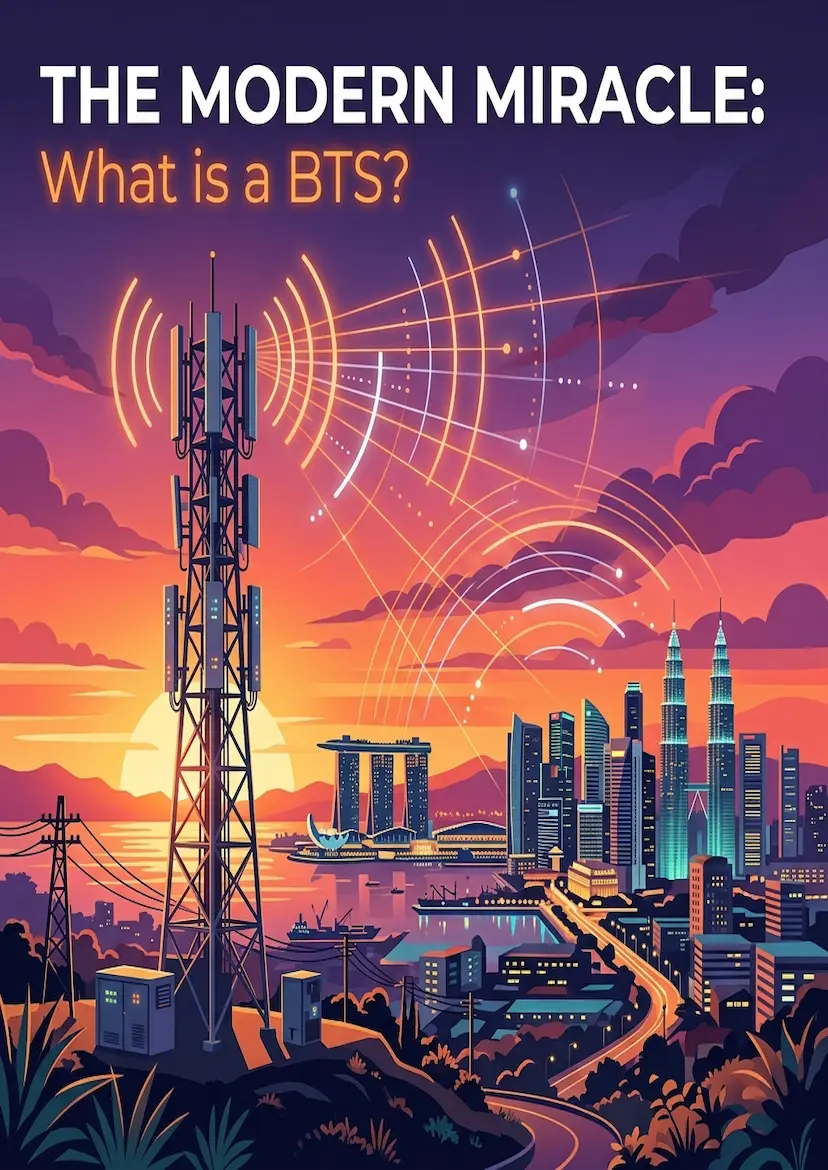
The Modern Miracle: What exactly is a BTS
The Unsung Heroes of the Airwaves
If you’ve ever driven along the North-South Highway in Malaysia or the PIE in Singapore, you’ve seen them: tall, slender steel towers standing guard over the landscape. Sometimes they look like giant palm trees, other times like industrial beacons.
We mostly ignore them—at least until our phone bars drop to zero.
But these towers are the reason we can call home, send a WhatsApp, or navigate through a new city. They are the Base Transceiver Stations, or BTS. In this first part of our investigative series, we’re going to look at how these "Miracles of the Airwaves" evolved from bulky 80s tech into the 5G powerhouses that connect our modern world.
What is a BTS, anyway?
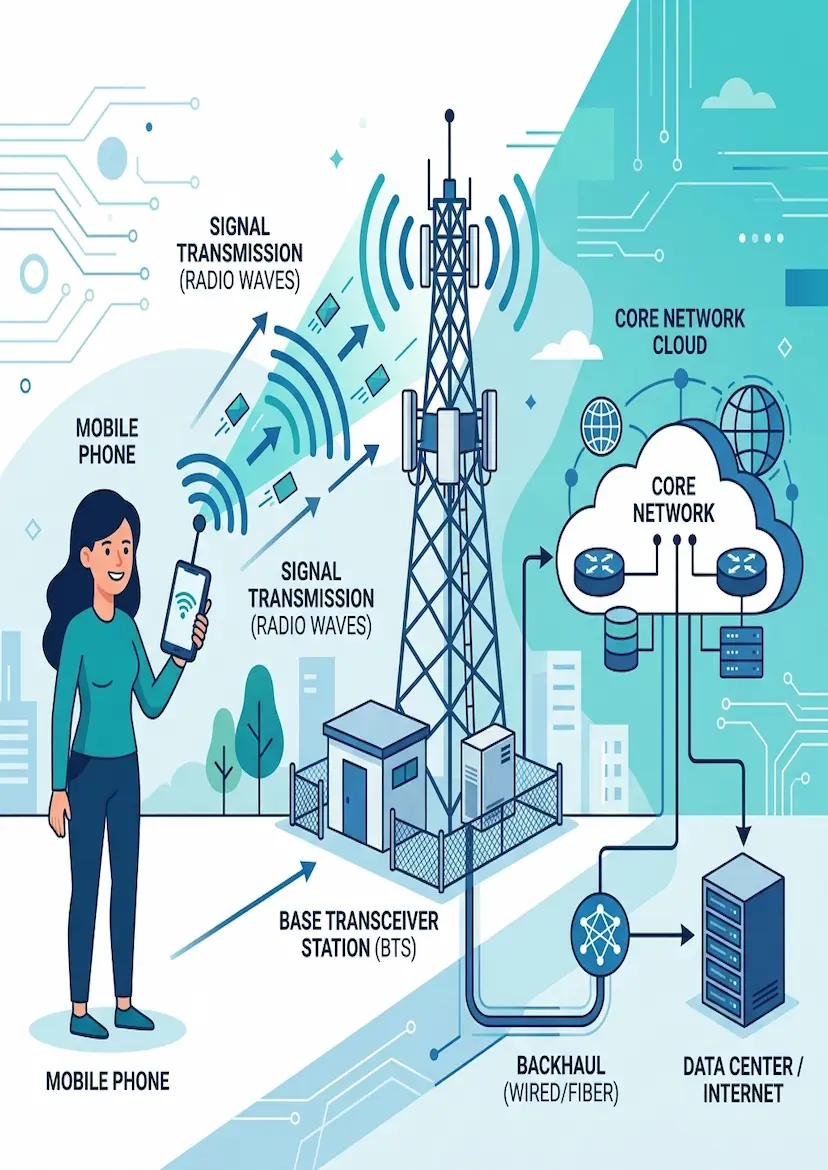
Think of a BTS as a high-tech translator. Your mobile phone communicates via radio waves, but the global internet and phone network speak in digital data. The BTS acts as the bridge.
When you make a call, your phone sends a weak radio signal to the nearest BTS. That tower catches the signal, amplifies it, and sends it through high-speed cables to the rest of the world. It’s a constant, invisible conversation happening Millions of times a second across the SG/MY region.
A History of the "G's" (1G to 3G)
To understand why scammers are attacking us today, we have to look back at where it all began. Every "Generation" (that’s what the 'G' stands for) brought more speed, but it also changed the way these towers worked.
1G: The Era of the "Brick"
In the 80s, mobile tech was analog. The phones were massive, the audio was noisy, and there was zero security. If someone had a radio scanner, they could listen to your calls as easily as tuning into a FM station.
2G: The Digital Revolution (GSM)
This is the era where the term BTS became famous. Introduced in the 90s, 2G gave us SMS (texting) and encrypted calls. For the first time, our conversations were "scrambled" so people couldn't listen in.
Crucial Note: This is also the protocol that scammers love. While 2G was a massive leap forward, its security was designed in the early 90s—and it has a fatal flaw that we still live with today.
3G: The Taste of the Internet
By the 2000s, towers were upgraded to handle data. Suddenly, we could browse (slowly) and send emails. The BTS became a NodeB. In Singapore and Malaysia, this was the era when the mobile web really took off.
Preview unavailable
Why Should You Care?
You might wonder why a "charity project" like VetoCaller is talking about history. It’s because knowledge is your first line of defense.
Even though Singapore has sunset its 3G networks and Malaysia has done the same to focus on 4G and 5G, your phone still has the "ghost" of these old protocols inside it.
In the next post, we’re going to pull back the curtain on The Legacy Trap. We’ll show you exactly why your ultra-modern 5G smartphone is still vulnerable to an attack that relies on 30-year-old 2G technology.
Stay vigilant. The towers are watching, and so are we.