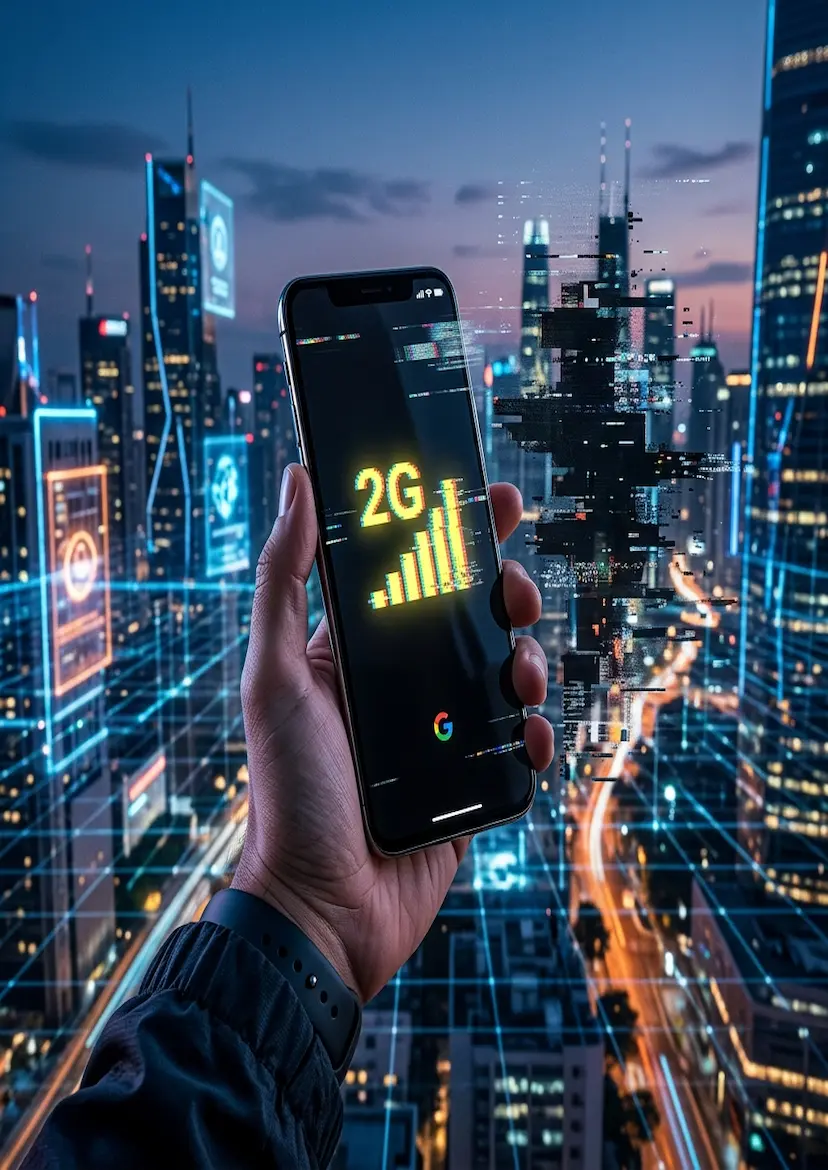
The Legacy Trap: Why 4G/5G isn’t enough
The Myth of Secure Signals
You probably feel safe. You’ve got the latest 5G smartphone, your banking app uses biometric face IDs, and the little padlock icon in your browser tells you everything is encrypted. You see that "5G" or "4G" logo at the top of your screen and assume your connection is a fortress.
But there is a "trapdoor" in that fortress. And scammers in Malaysia and Singapore are using it every single day to bypass your security and send fraudulent SMS messages directly into your inbox.
Welcome to The Legacy Trap.
The "Handshake" Problem
In the modern world of 4G and 5G, security is built on something called Mutual Authentication.
Think of it like a secret handshake. When your phone connects to a legitimate gNodeB (5G tower) in downtown Singapore or Kuala Lumpur, they both verify each other. Your phone asks, "Are you the real network?" and the tower proves it. If it can't prove it, your phone won't connect. This is why it’s incredibly hard for scammers to "fake" a 5G signal.
However, there is a weak link: 2G (GSM).
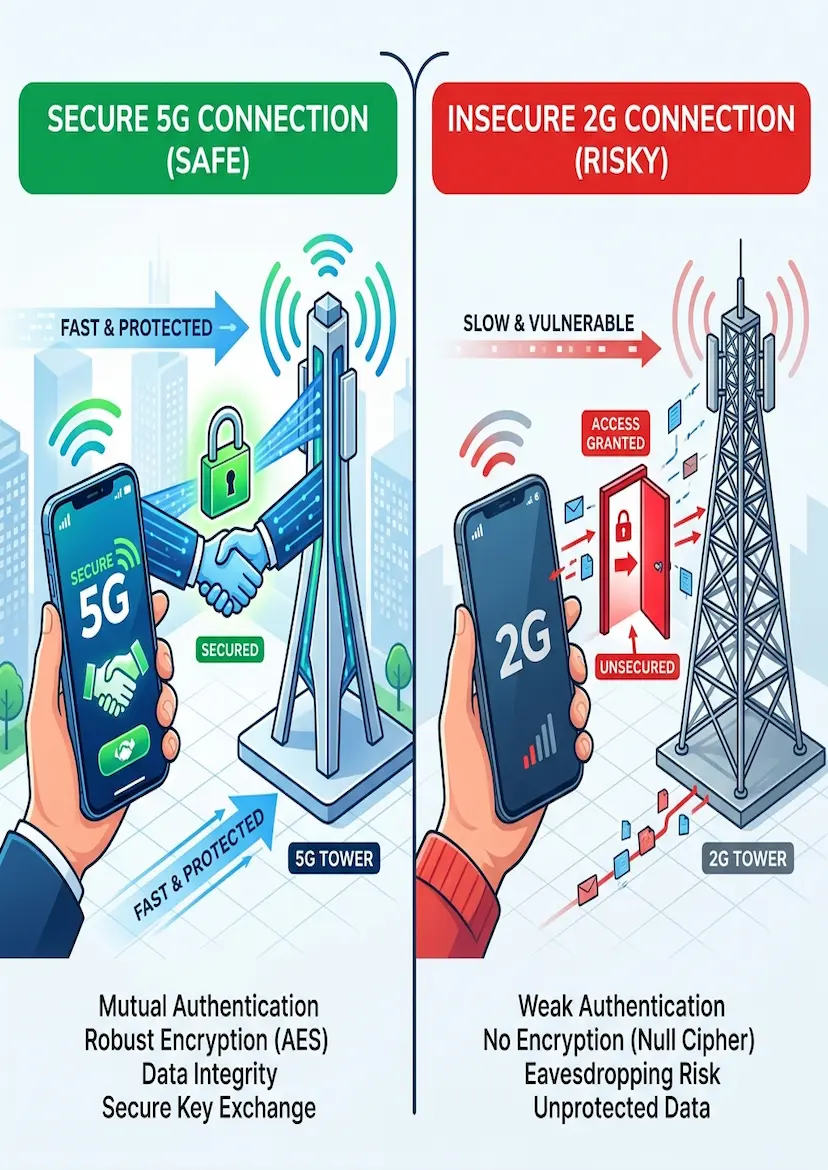
In the 2G era, the security "handshake" was one-sided. Your phone had to prove its identity to the network, but the network never had to prove itself back to the phone. The phone simply trusted any 2G signal it found.
Forced Downgrade: The Scammer's Weapon
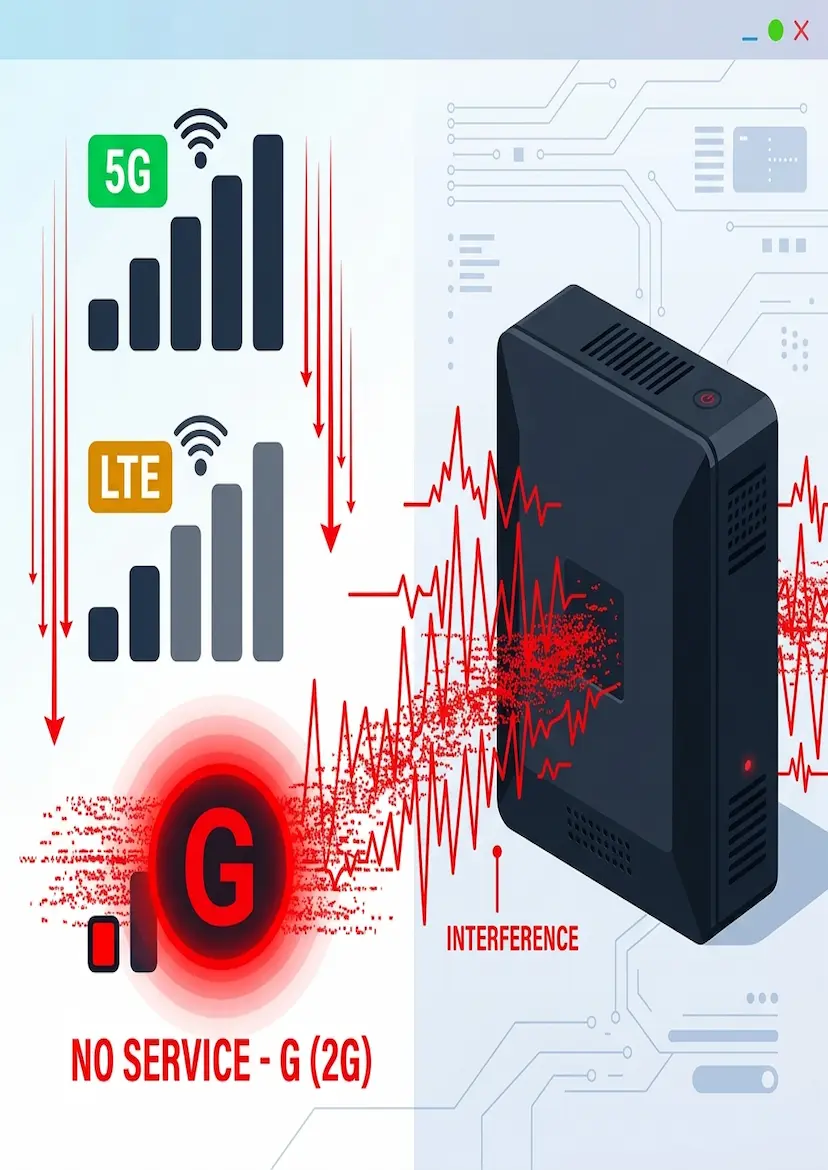
Scammers know they can’t break 5G encryption. So, they don’t try. Instead, they use a "Fake BTS" device to perform a Downgrade Attack.
Here is how it happens:
The scammer projects an ultra-strong, rogue 2G signal in a crowded area.
The device essentially "screams" louder than the legitimate 5G towers.
Your phone, seeing a powerful signal and designed to maintain connectivity at all costs, drops its 5G connection and falls back to the insecure 2G signal.
Within seconds, your signal bars might drop from 5G to a simple "E" (Edge) or "G" (GPRS). You might not even notice the change.
Why 2G is Still in Your Phone
You might be thinking, "Wait, didn't Singapore shut down 2G years ago? Isn't Malaysia doing the same?"
Yes, the legitimate carriers have turned off their 2G towers. But the software and hardware inside your smartphone still support 2G for emergency roaming and legacy compatibility. Scammers are exploiting this "ghost" protocol. Because your phone can still speak 2G, it will connect to any 2G signal it thinks is legitimate.
Once your phone is connected to their rogue station, the scammer can send you an SMS that looks like it’s from your bank, the tax department, or a courier—bypassing all of the telco’s spam filters.
Knowledge is power. Now that you know about the "Trap," stay tuned for our next post where we take an investigative look at the hardware itself: The Invisible Tower.