
The Invisible Tower: What is a Fake BTS?
The Enemy in the Backpack
When most of us think of a "cell tower," we think of massive steel structures on top of buildings. But what if I told you that a highly effective, illegal cell tower could be hidden inside an unmarked van, a parked car, or even a backpack in a crowded shopping mall?
This is the reality of the Fake BTS, also known in the cybersecurity world as an IMSI Catcher.
As part of our investigative series, we’re going deep into the hardware. How does a device the size of a laptop overpower a Billion-dollar network infrastructure to hijack your phone?
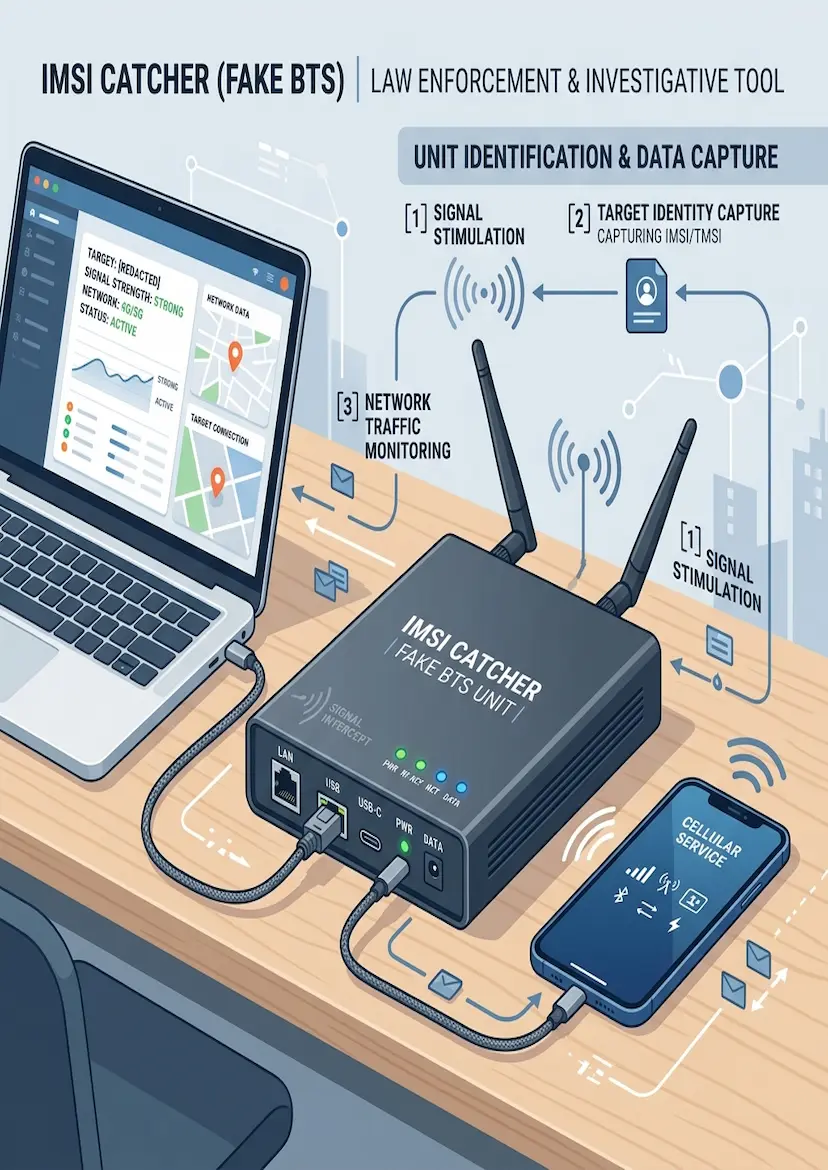
The "Loudest Voice in the Room"
A Fake BTS unit is essentially a radio transceiver that can be tuned to mimic the frequencies used by legitimate telcos like Singtel, Celcom, or Maxis.
It works on a very simple principle: Signal Seniority.
Mobile phones are designed to always connect to the strongest available signal to ensure you don't drop a call. A scammer operating a Fake BTS in a crowded area (like the KL Sentral transport hub or a busy Orchard Road mall) is projecting a signal that is physically closer to you than the real tower several kilometers away.
To your phone, the Fake BTS is the "loudest voice in the room." Your device automatically "hands over" the connection to the rogue station without ever asking for your permission.
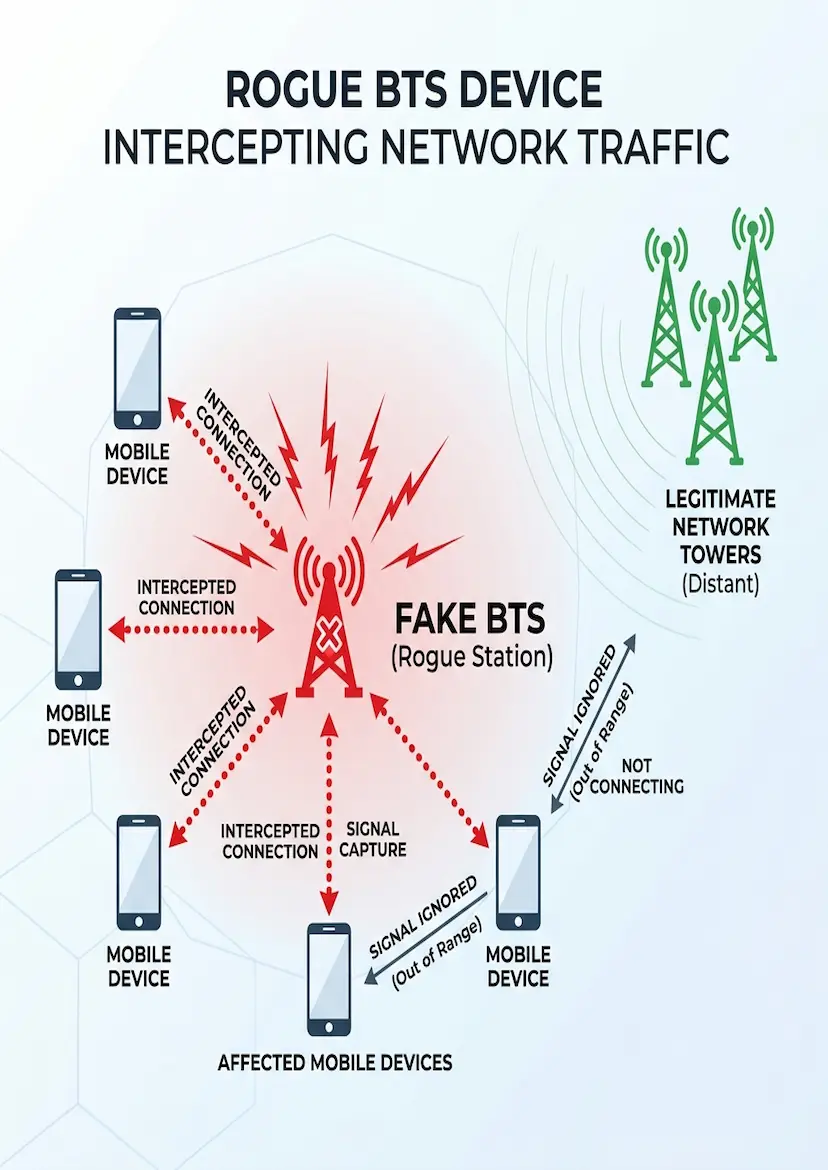
How it Intercepts You
Once your phone is "snared" by the Fake BTS, the attacker has a direct line to your device. Here is what they can do:
Identity Theft: The device captures your IMSI (International Mobile Subscriber Identity)—a unique number that identifies your SIM card.
SMS Injection: This is the primary weapon for scammers in Malaysia and Singapore. The Fake BTS can "push" anonymous SMS messages to every phone connected to it.
Spoofing Authority: Because the Fake BTS is acting as the network, it can make these SMS messages appear with any Sender ID they want. They can make the message look like it came from "MAYBANK," "DBS," or "POSLAJU."
The "Mobile" Threat
What makes these devices so hard for authorities to catch is their portability. Scammers aren't setting up permanent shops; they are nomadic.
The Van Method: A syndicate can park an unmarked van near a busy cross-border checkpoint. The heavy metal body of the van hides the equipment, while the antenna is hidden in a plastic roof box.
The Crowded Walkthrough: In some cases, scammers carry smaller units in backpacks through high-traffic shopping malls. They move with the crowd, casting a "net" of rogue signals that captures hundreds of phones every few minutes.
In our next post, we’re focusing on a specific, high-risk location where these "Invisible Towers" are currently hunting: The JB-SG Border.
We’ll look at real-world raids and why travelers are being targeted.